How to improve your chances for successful new products? Stages of product development.
- Agnes Sopel

- Apr 22, 2021
- 3 min read

All products have to be developed at some stage. Each of the products that we see, once was an idea. Some of the products will be at a point a new innovation.
Lets look at the process of developing new product or service. Lets look at some stages that are being followed and the some risks that need to be considered.
Product development stages
We understand the difference between the innovation and invention. We know how to use innovation and invention on how to use new product and create profits. It doesn't matter, whether the marketer is going to use innovation or invention, but what they do is following the below product development stages:
1) An idea
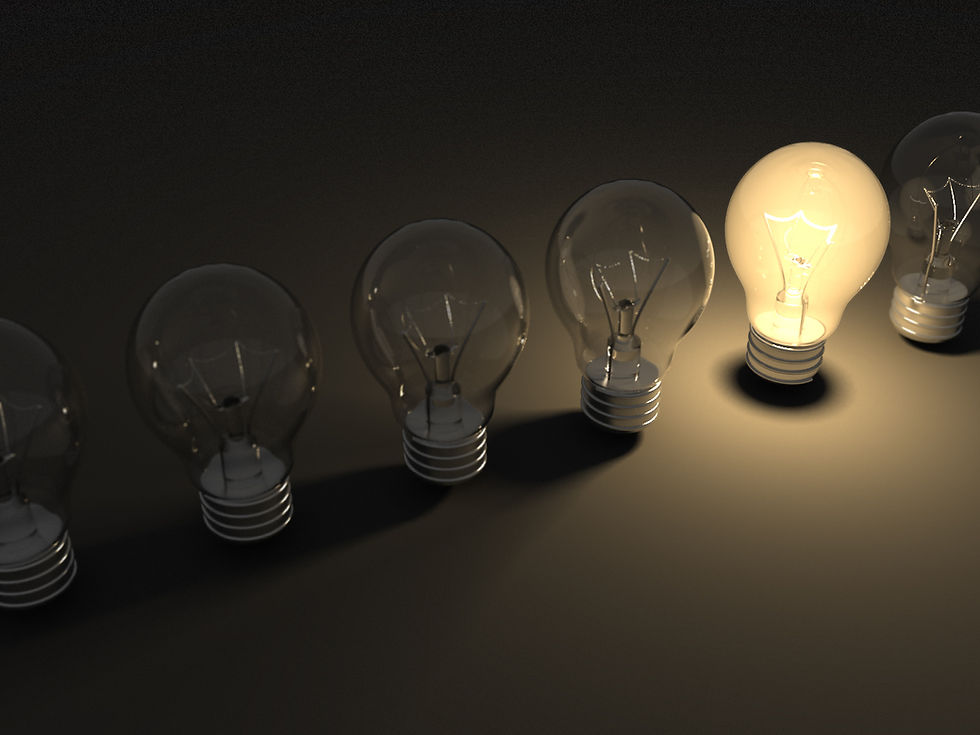
Product development is connected back to the 4Ps. Basically, we do not just develop a product, but first we come up with a conceptual idea. The idea of a product on how is it going to be used, who is going to be satisfied having the product, as well as who will be our competitors and who we need to be aware of. A product have have the desirable attributes of the target market and will need to be used and satisfy the consumer needs.
2) Screening
Once we have had an ideas the very simple fact is that not all ideas are the good ones. Marketers need to test the consumers reaction to the new concept. We can throw the idea around and see what others think. The screening is necessary to eliminate poor ideas as well. We can ask questions like: How the consumer will benefit from the product? Can the product be made? Will the product bring profits?
At this stage we can make modification and assess whether any idea is a good one.
3) Concept development

Once the feedback from the consumers and the business is positive, we need to move along and develop a prototype. This stage will allow you to see the actual product and how it works. Additionally, the target market can be asked for feedback and asked for improvements.
4) Market strategy
In this stage we look at how are we going to approach the 4Ps. We want to ensure that the new product address the target market needs and wants. We can identify who is the primary target market as well as a secondary target market.
5) Feasibility study
Once we have done the product design and addressed we need to ask ourselves the fundamental questions? Do we have the labour and resources required to make the product? What would be the production costs? Are they not too high? Do we have the distribution channels in place to get the product to end consumer? How are we are going to promote the product? Will the promotion be cost effective? Can we make money from the product?
6) Product design
Here, we determine how the product will look like. The design will depend on what it does as well as what the target market wants. You can't just make a product which is just simply functional, but it need to satisfy what the target market wants.
7) Test marketing

In this stage we test the acceptance of the product. This generally occurs by offering the product sample to the target market. The consumer feedback in this step will improve the product and you can potentially determine whether the product can officially go to the market.
8) Market entry
Once the test marketing was successful we can move to the market entry. The product officially enters the market and is sold to everyone. Here, the product life cycle begins and its further success will be determined by the consumers, competition and future improvements.
Following the simple steps above you can improve your chances for successful products. You will hopefully gather profits from this. This process however need to be constantly revisited. We need to constantly improve our products, update our products, stay up to date with our competitors, so it can bring long term profits.
Product development risks

Many risks are associated with the product development. We need to assess those to ensure it can run smoothly.
One of the risks of new product development is that it has limited applicability. This is looking at the market segmentation. If there is a small segment of the market interested in it than the market may become too small.
Another risk is associated with the competition. It is not always possible to determine what your competitors are working on. It could be that your great idea may be developed at the same time by your competition. This is generally visible when improving current products.
Customer changing needs also need to be considered. Especially, when the product development is a long process. There is a possibility that consumers will change their mind even after they have provided a positive feedback at the early stages.
There are also risks of not achieving the desired profits. These could be connected to the higher than expected production costs.


Comments